Table of Contents
Introduction
How We Evaluated These Tools
Comparison Table
Best AI Tools for Character Casting in Filmmaking
How to Choose the Right AI Character Casting Tool
Common Mistakes to Avoid
FAQs
Final Thoughts
Introduction
Casting the right character for a film is a creative challenge that can shape the entire story. Directors need more than a visually appealing face. They need characters that match the personality, emotions, style, and world of the project. Traditional casting processes often require multiple rounds of auditions, references, and revisions before a final decision is made.
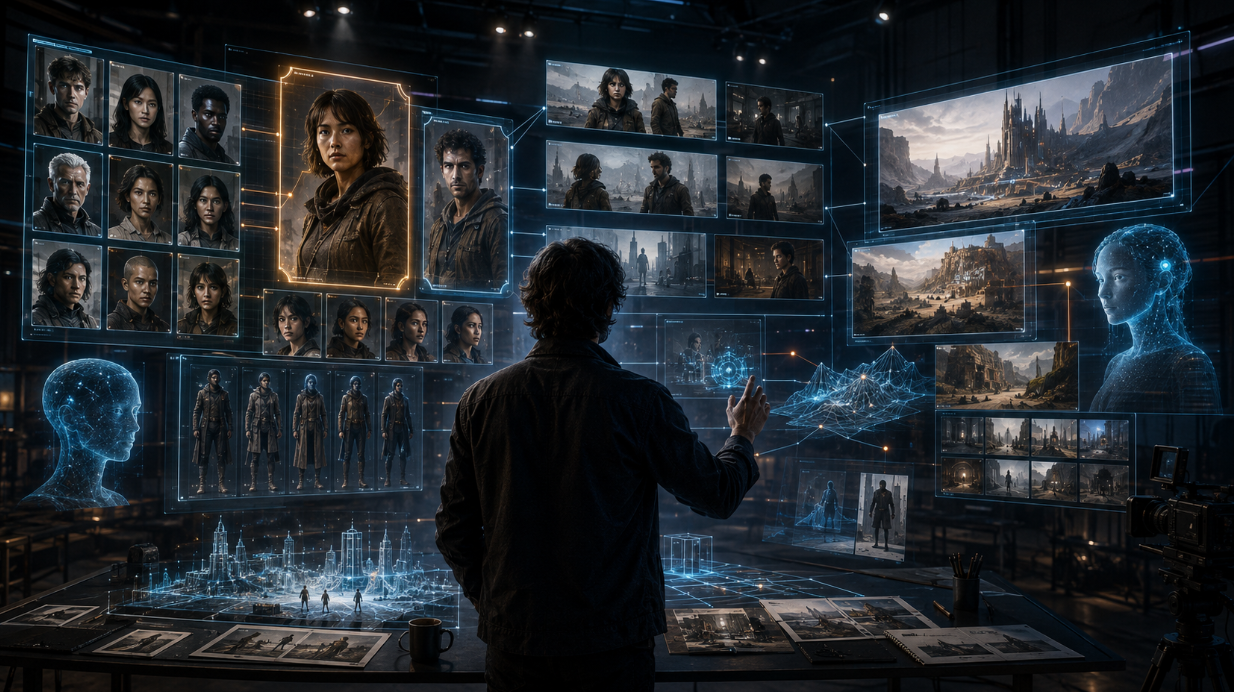
AI tools are helping filmmakers explore character possibilities faster by creating visual references, developing character profiles, and supporting pre-production decisions. The most useful platforms go beyond generating portraits. They help maintain consistency, connect character choices with the larger production, and support filmmakers from early concepts to final scenes.
This list covers AI tools that can help filmmakers with character casting, visual development, and maintaining character identity throughout production.
How We Evaluated These Tools
We evaluated these AI character casting tools based on:
Character creation and visual reference capabilities
Ability to maintain character consistency
Support for filmmaking workflows
Creative control and customization options
Ease of use
Pricing accessibility
Suitability for different production needs
Comparison Table
| Tool | Best For | Key Strength |
|---|---|---|
| Invideo Agent | Complete AI filmmaking workflows | Character casting with project memory and continuity |
| Leonardo AI | Character concept development | Fast visual exploration |
| Scenario | Custom character styles | Training personalized visual models |
| Krea AI | Creative experimentation | Real-time visual exploration |
| Artbreeder | Character variations | Portrait and feature exploration |
1. Invideo Agent
Best for: Complete AI filmmaking workflows with character casting and shot continuity
Invideo Agent is an AI filmmaking collaborator designed to support the entire creative process, including character development, casting, scene planning, and production. Instead of treating casting as an isolated step, it connects character decisions with locations, costumes, camera direction, and storytelling choices.
Filmmakers can develop characters through reference sheets that include different views, expressions, and appearance details. These references help maintain character identity across multiple scenes, which is especially useful for short films, episodic projects, and micro dramas.
A major advantage of invideo Agent is its project memory. It keeps track of characters, locations, and creative rules so filmmakers do not need to redefine the same details for every scene. It works more like a creative team where different specialist agents can handle tasks such as casting, cinematography, and production planning.
The platform also supports multi-agent workflows where creators can set up specialist agents with different responsibilities. A casting agent can work alongside location and scene agents, allowing multiple parts of production to move forward together while using the same project context.
Invideo Agent now also includes its latest version ‘Invideo Agent Two’, bringing stronger project understanding through persistent memory, expert creative agents, and the ability to work with scripts, references, and footage. This helps filmmakers build a connected workflow where casting decisions, character details, and production choices stay aligned throughout the creative process.
Key features:
Character reference sheets with multiple views
Character continuity across scenes and episodes
Specialist agents for different production roles
Connected filmmaking workflow from development to editing
Best for:
Independent filmmakers
Short films
Series and micro dramas
Brand films
Where it falls short:
Invideo Agent is designed for creators managing complete productions. It may be more than needed for users who only want quick character portraits.
Pricing:
Available through invideo subscription plans.
2. Leonardo AI
Best for: Character concepts and visual exploration
Leonardo AI is useful for filmmakers who want to explore different character directions before production begins. It can help generate character portraits, costume ideas, and visual references that support early creative discussions.
During pre-production, directors can use it to test different appearances and styles before deciding on the final character direction. It can be especially helpful for fantasy, animation, and concept-driven projects where visual development plays an important role.
Key features:
AI-generated character visuals
Style experimentation
Image editing capabilities
Creative reference generation
Best for:
Character concept art
Early production planning
Visual development
Where it falls short:
It focuses mainly on creating images and does not provide a complete filmmaking workflow with connected project memory.
Pricing:
Offers free and paid plans depending on usage requirements.
3. Scenario
Best for: Creating custom character styles
Scenario helps creative teams build consistent visual styles by training AI models with their own references. This makes it useful for projects where filmmakers want characters to follow a specific artistic direction.
For character casting, Scenario can help teams explore different looks while maintaining a defined visual identity. It is useful during the development stage when creators are building worlds, characters, and visual guidelines.
Key features:
Custom AI models
Personalized visual styles
Image generation controls
Team collaboration features
Best for:
Animation projects
Game cinematics
Creative studios
Where it falls short:
Scenario is focused on visual creation rather than managing a complete film production process.
Pricing:
Pricing depends on selected plans and usage.
4. Krea AI
Best for: Fast character visualization
Krea AI helps creators quickly explore character ideas and visual styles. Its real-time generation approach allows filmmakers to experiment with different appearances and creative directions during early development.
It can support directors who want to compare multiple character options before finalizing a design. The tool works well for brainstorming sessions where speed and visual experimentation matter.
Key features:
Real-time image generation
Visual style testing
Image improvement tools
Creative exploration features
Best for:
Character brainstorming
Mood boards
Early concept work
Where it falls short:
It does not provide the same level of production memory and continuity management needed for longer filmmaking projects.
Pricing:
Offers free access with paid upgrades.
5. Artbreeder
Best for: Exploring character variations
Artbreeder is designed around experimenting with character features and visual variations. Filmmakers can use it during the idea stage to explore different appearances and build inspiration for fictional characters.
It can be helpful when directors need to compare different character directions before moving into detailed production planning.
Key features:
Portrait variations
Character exploration
Image mixing capabilities
Creative experimentation
Best for:
Character ideation
Fiction projects
Early visual development
Where it falls short:
It is better suited for exploration rather than managing character continuity across a complete film.
Pricing:
Offers free and paid options.
How to Choose the Right AI Character Casting Tool
The right tool depends on your production goals:
Choose invideo Agent if you need character casting connected with complete filmmaking workflows.
Choose Leonardo AI if you need quick character concepts.
Choose Scenario if you want custom visual styles.
Choose Krea AI for fast creative testing.
Choose Artbreeder for exploring different character variations.
AI is changing the way filmmakers plan and produce visual content by connecting creative decisions across different stages of production. Character casting is no longer only about finding a face. It is becoming part of a larger process involving story, visual identity, continuity, and production planning.
Common Mistakes to Avoid
Choosing a tool only based on image quality.
Ignoring character consistency across multiple scenes.
Using separate tools without a connected workflow.
Not considering the scale of the project.
Forgetting the importance of creative control.
FAQs
Can AI tools help filmmakers cast fictional characters?
Yes. AI tools can help filmmakers create character references, explore different appearances, and develop visual concepts before production. They support creative decisions but do not replace the filmmaker’s direction.
How do AI tools maintain character consistency?
Some AI tools use saved references, project information, and character details to keep appearances consistent.
Can AI create complete characters for films?
AI can help create character designs, reference sheets, and visual concepts. Filmmakers still need to guide the story, personality, performance, and final creative decisions.
Is AI character casting useful for independent filmmakers?
Yes. Independent filmmakers can use AI tools to explore ideas faster, create references, and plan characters before investing in production resources.
What is the difference between AI character creation and AI casting?
AI character creation focuses on generating visuals. AI casting focuses on matching characters with the story, maintaining identity, and supporting production decisions.
Can AI tools help with episodic filmmaking?
Yes. Tools with project memory are especially useful for episodic projects because characters and locations need to remain consistent across multiple episodes.
Final Thoughts
AI character casting tools are becoming valuable resources for modern filmmakers. The best option depends on whether you need simple visual exploration or a complete creative workflow.
Which AI character casting tool would you consider using for your next filmmaking project?