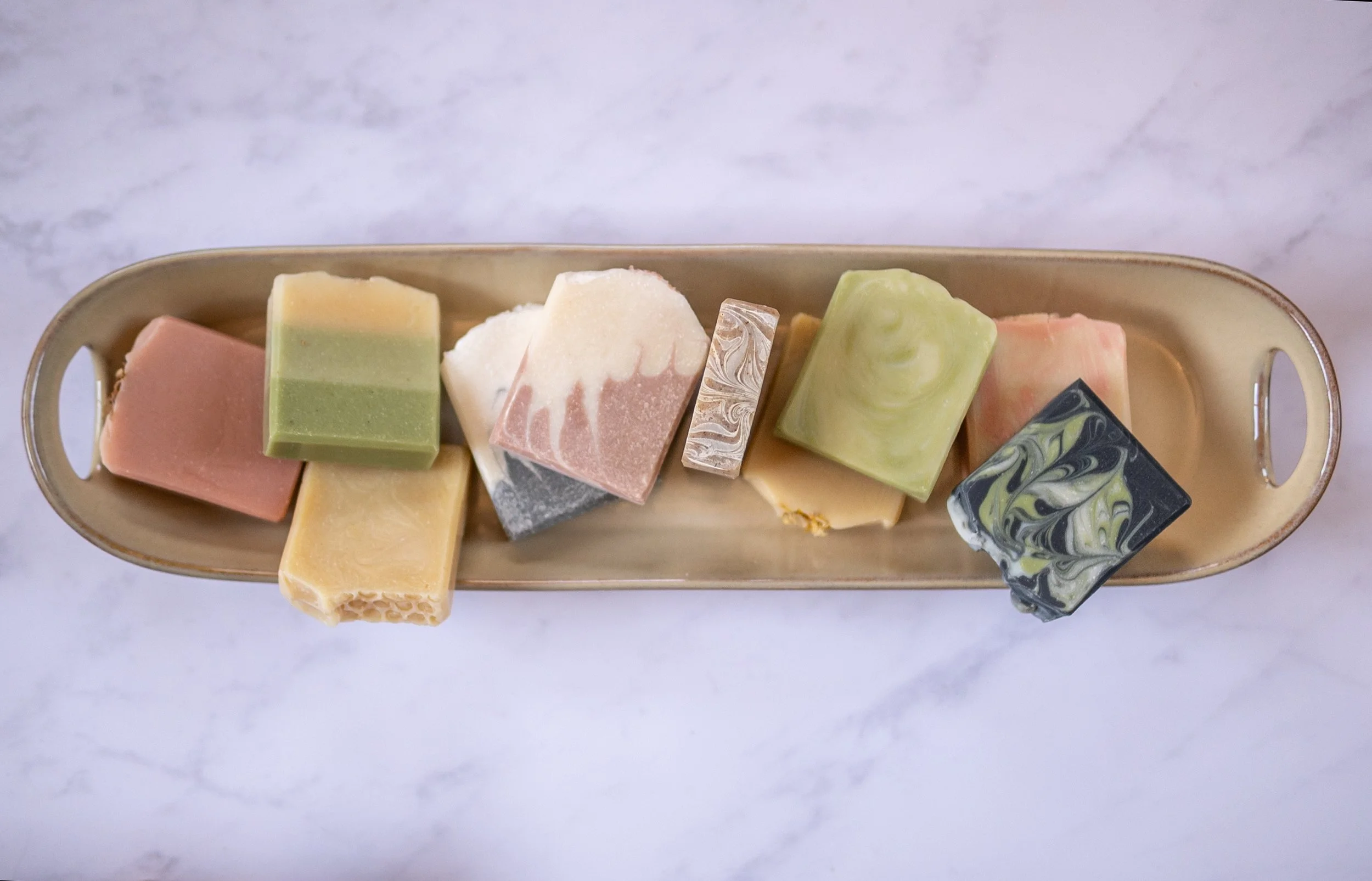
An artisan perspective from Ivy Soap House | Hertfordshire, UK
A bar of soap may look simple, but the choices behind it make all the difference. From the balance of oils and butters to the time allowed for curing, traditional soapmaking brings together practical knowledge, patience and a little creativity. At Ivy Soap House, our small-batch approach gives us the opportunity to pay attention to each of those details.
It begins with the ingredients
Different oils and butters bring different qualities to a finished bar. Olive oil is valued for its conditioning character, while coconut oil helps create a satisfying lather and cleansing action. Shea and cocoa butters contribute richness and a creamy feel, and castor oil is often used in smaller amounts to support lather.
The secret is not simply adding as many luxurious ingredients as possible. It is choosing a balanced combination that works well together. A thoughtfully formulated bar should feel pleasant to use, hold its shape and cleanse effectively without relying on an unnecessarily complicated ingredient list.
The beauty of botanicals
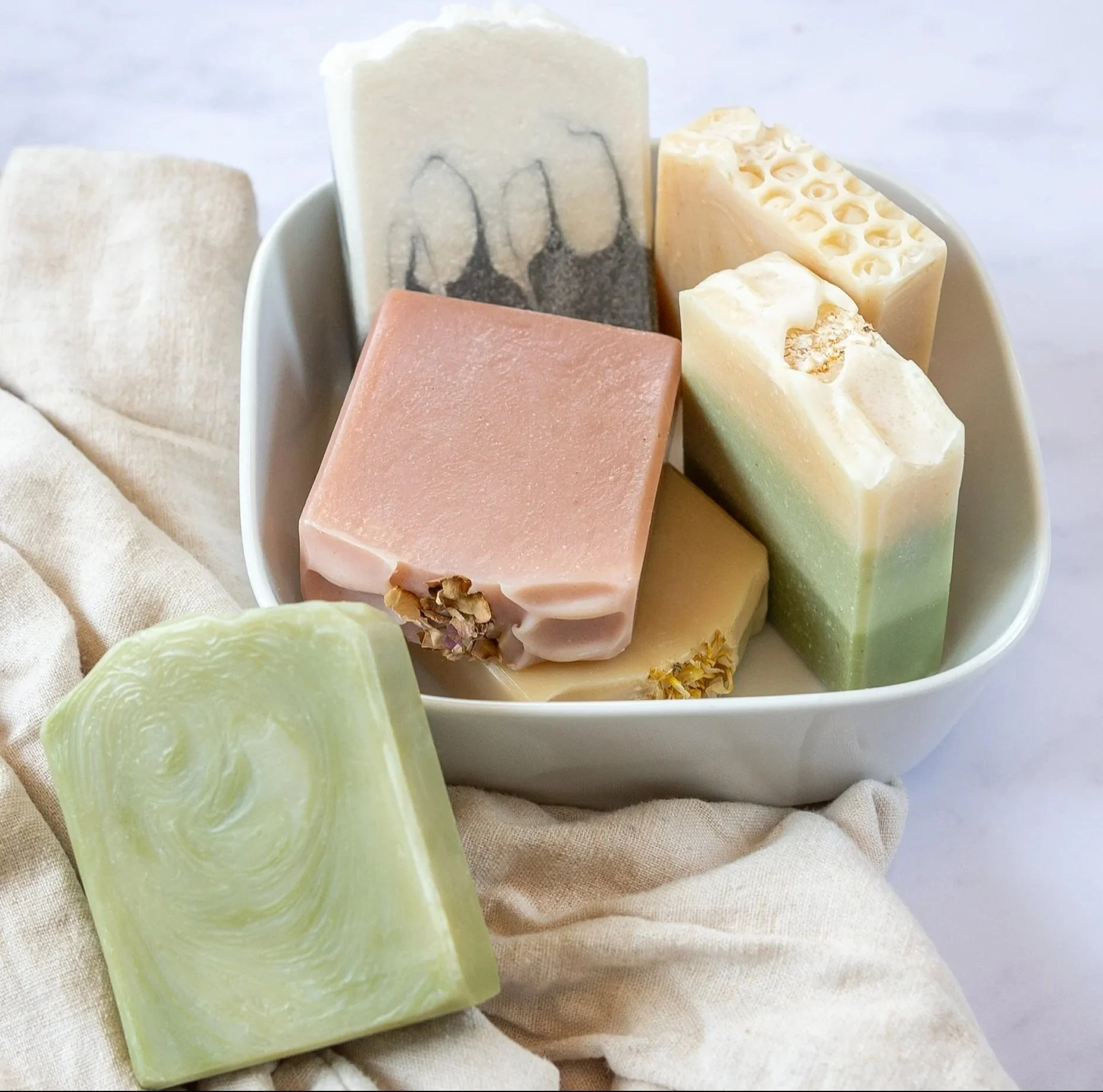
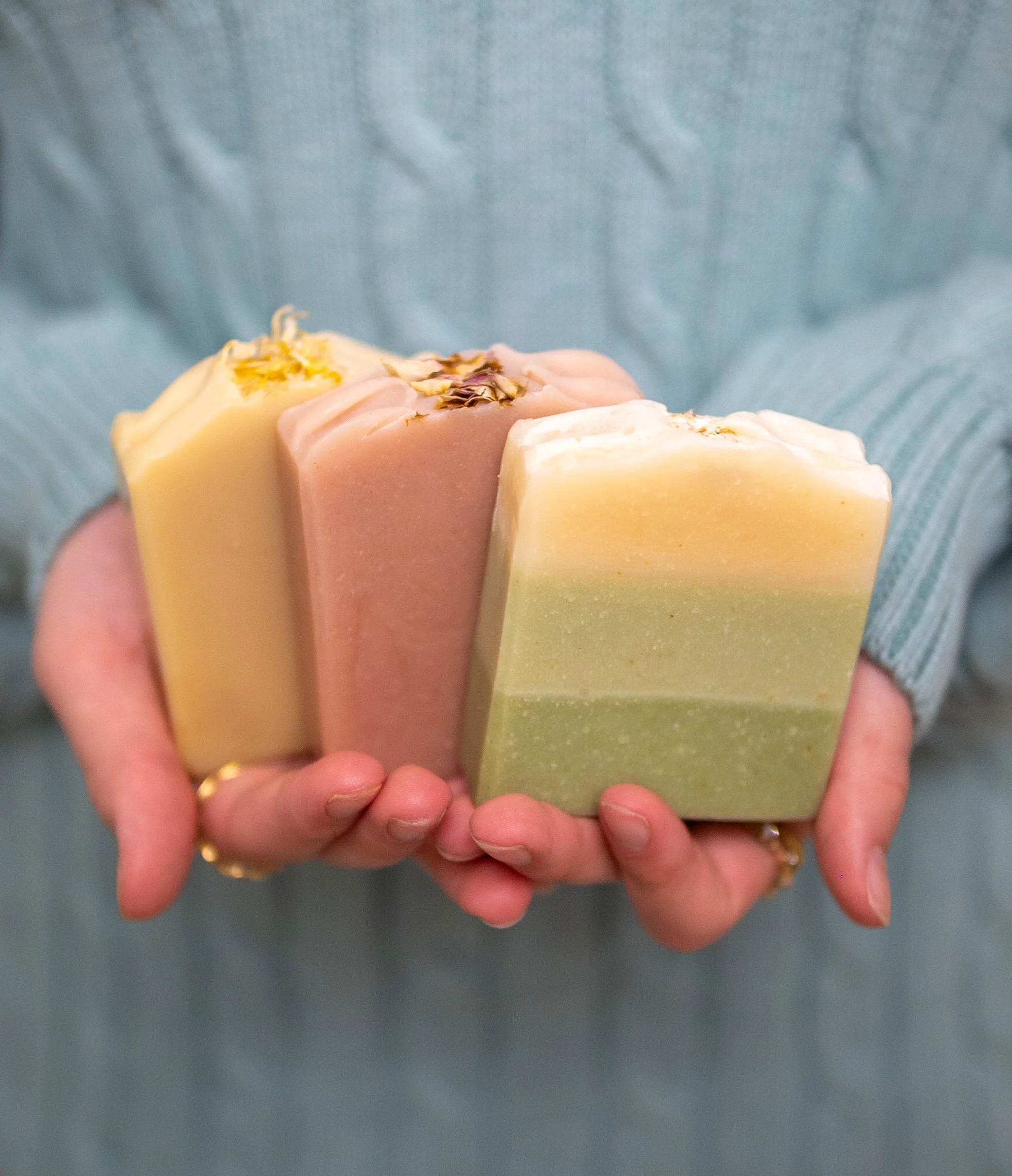
Beyond the base recipe, ingredients such as kaolin clay, oats and carefully selected essential oils can give each soap its own character. Clays can influence colour and texture, while oats add a gentle, tactile element. Essential oils contribute distinctive aromas, from fresh and uplifting to soft and floral.
We enjoy working with these natural variations. They allow us to create soaps that look and smell different while keeping the focus on the bar itself. Not every ingredient appears in every recipe; each combination is chosen for a reason.
Why the cold-process method takes time
Our soaps are made using the traditional cold-process method. Oils and butters are combined with a carefully measured lye solution, beginning the chemical reaction known as saponification. The mixture is then poured into moulds, left to set and cut into individual bars.
But cutting is not the end of the process. The bars need time to cure, allowing excess water to evaporate and helping the soap become harder and longer-lasting. That waiting period is an important part of the work, even if it is rarely visible in the finished product.
Small batches, individual character
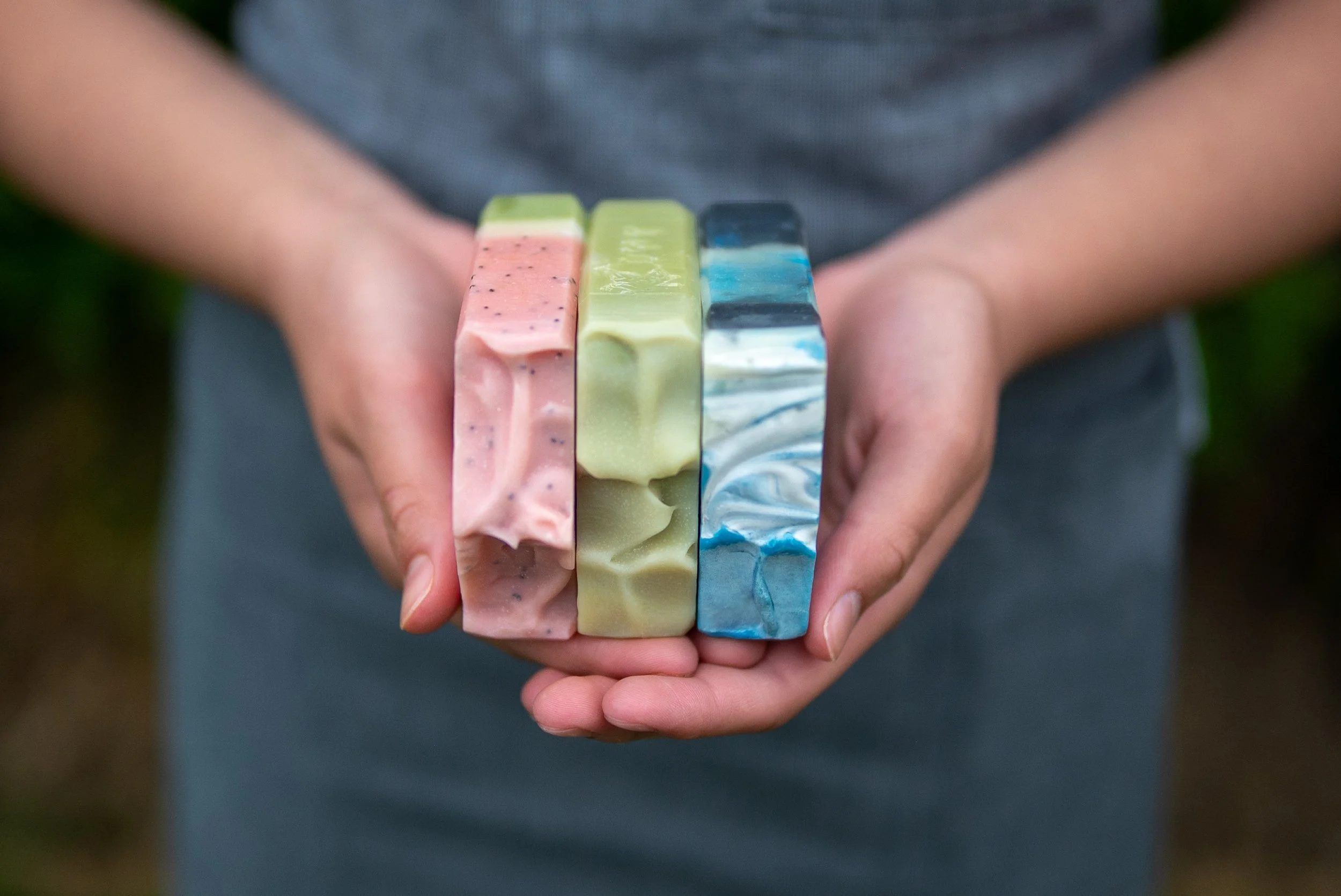
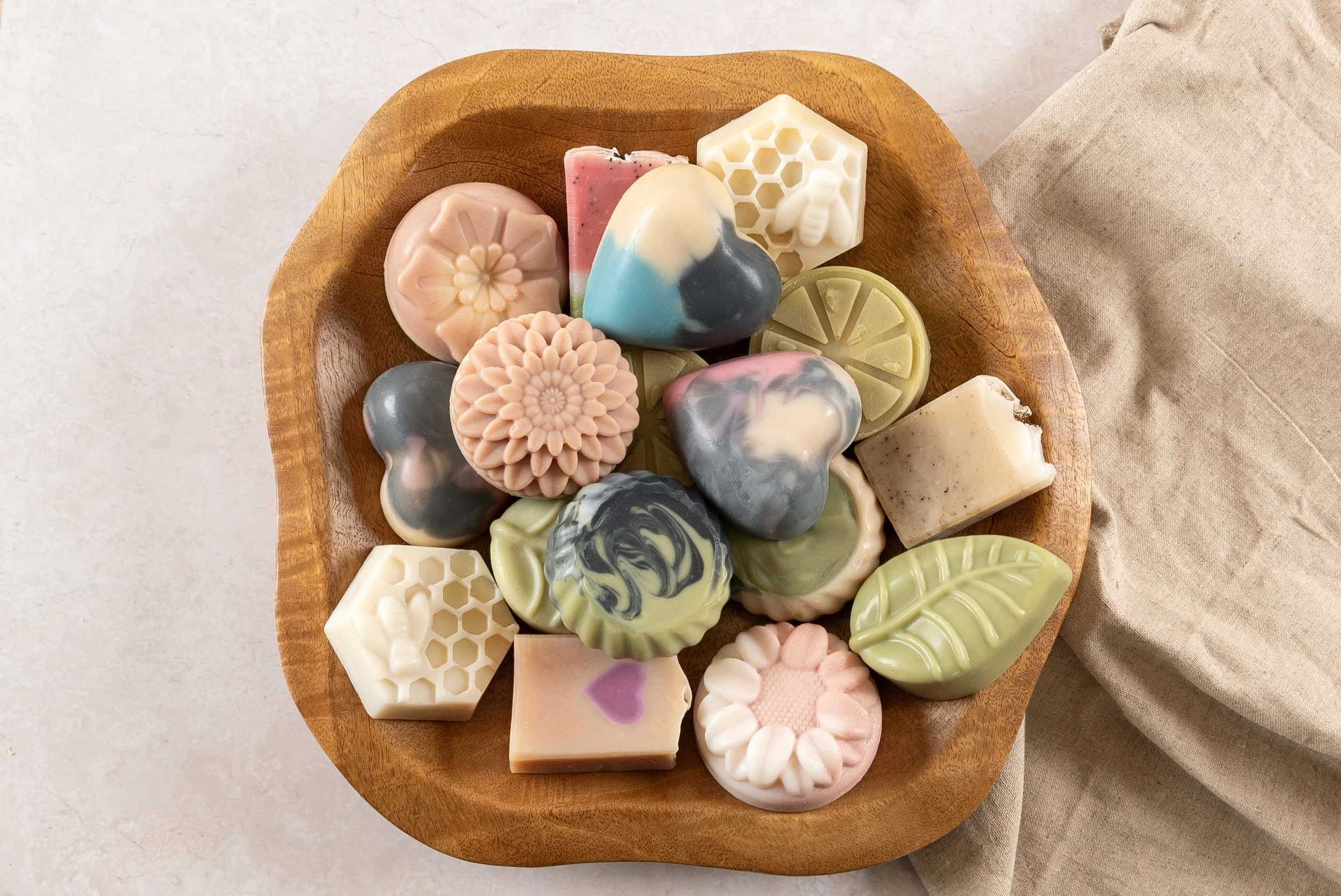
Making soap in small batches lets us monitor each stage closely, from preparing the ingredients to finishing and packing the bars. It also means that subtle differences in swirls, colours and botanical details are to be expected. We see these as part of the individuality of handmade soap rather than imperfections to hide.
At Ivy Soap House, we also think about what happens after a bar leaves our workshop. Our soaps are presented in plastic-free packaging, reflecting our preference for simple, considered choices wherever possible.
Choosing a handmade soap
If you are exploring handmade soap for the first time, look beyond the fragrance or appearance. Read the ingredient list, learn a little about the maker's process and consider which scents and textures you enjoy. If your skin is particularly reactive, checking the full ingredients and choosing carefully is especially important.
A good handmade soap is the result of many small decisions made well: the recipe, the method, the cure and the care taken throughout. That is what makes each bar more than just something to wash with.
Discover Ivy Soap House
We are a family-run soap and skincare business based in Hertfordshire, making small batches with plant-based oils, butters and carefully selected botanical ingredients. To explore our soaps and gifts, visit www.ivysoaphouse.com. You can also read our full guide, ‘What Makes a Quality Handmade Soap?’, at www.ivysoaphouse.com/blog/what-makes-quality-handmade-soap.
About the contributor
Ivy Soap House is a family-run handmade soap and botanical skincare business in Sarratt, Hertfordshire. Our small-batch soaps are made using the traditional cold-process method, with a focus on carefully selected ingredients and plastic-free packaging.