Your Studio Is Your Brand: What Your Workspace Says About Your Business
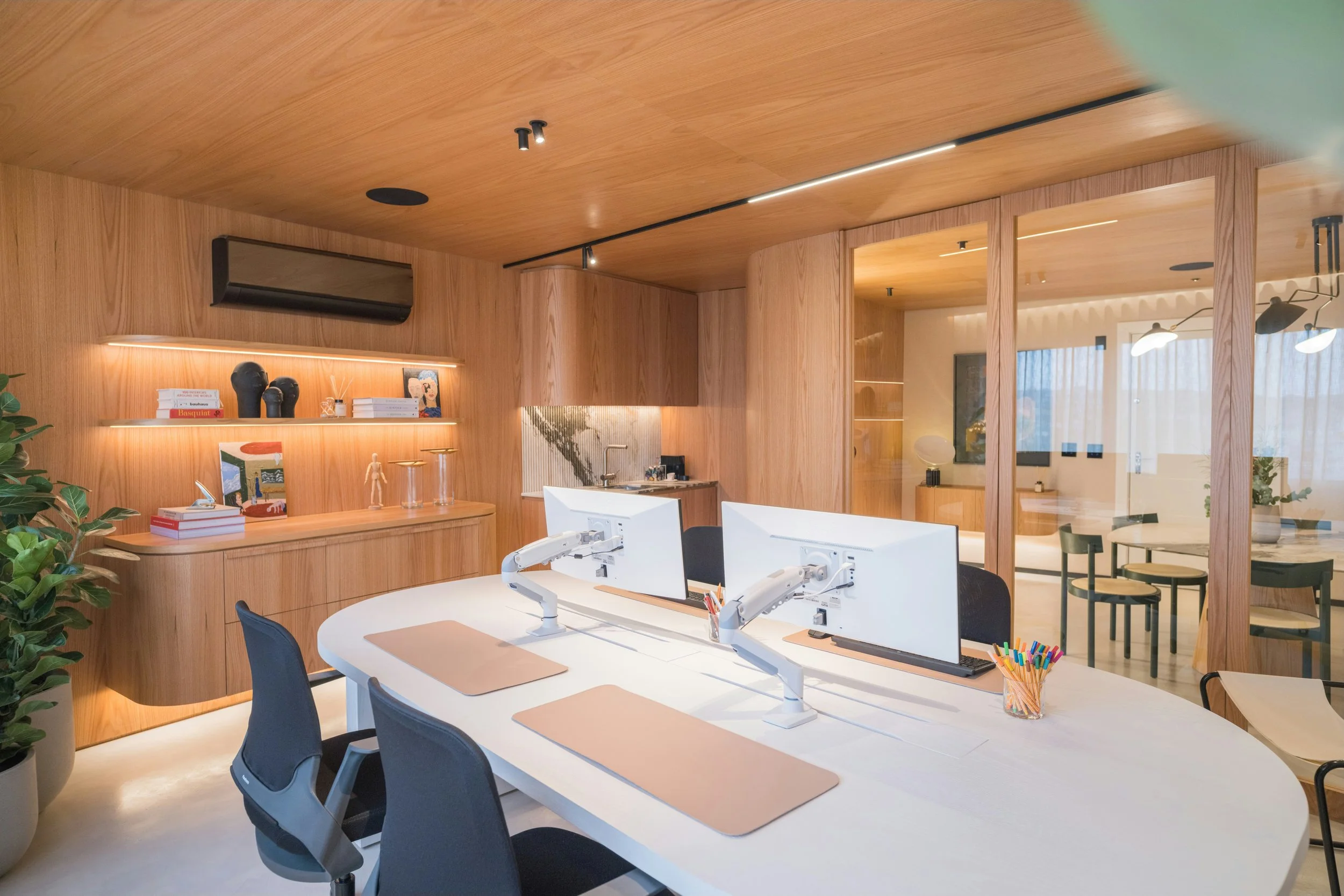
Most founders obsess over the digital side of their brand. The logo gets three rounds of revisions. The website copy is pored over word by word. The color palette is defended like a family heirloom. And that attention is right, because your website is often the first handshake a client gets.
But there is a second handshake most business owners forget about: the physical space where the work happens. The studio, the office, the corner of the house that shows up on every video call. In a world that swings between in-person meetings and camera-on calls, your workspace has quietly become part of your brand whether you designed it that way or not.
The question is not whether your space is saying something about your business. It always is. The question is whether it is saying what you want.
Your Space Speaks Before You Do
Walk into any room and you form an impression within seconds. You do it in someone's home, in a restaurant, in a doctor's office, and clients do exactly the same thing when they enter your workspace or glimpse it behind you on a call. Long before you have made your pitch, the space has already made an argument on your behalf.
A clean, considered, well-finished room signals that you are organized, that you sweat the details, and that you take your work seriously. A cluttered, half-finished, or worn-out space plants a small seed of doubt, even if the client cannot name why. That doubt is expensive. It shows up as hesitation, as more questions, as a slightly lower price the prospect is willing to pay.
This is not about luxury. A modest space can feel intentional and trustworthy. An expensive one can feel careless. The signal is care, not cost. Clients are reading for evidence that you finish what you start, and your environment is Exhibit A.
The Digital and Physical Brand Are One Loop
Here is where it gets interesting for anyone who has invested in a strong website. Your online brand sets an expectation, and your physical space either confirms it or quietly breaks it.
Imagine a designer with a stunning, minimal, thoughtfully art-directed website. A client falls in love with that aesthetic, books a discovery call, and joins the video meeting only to find the designer sitting in front of a cluttered wall with a tangle of cords and a faded poster hanging crooked. Nothing was said, but something just slipped. The promise the website made was not kept by the room.
Brand consistency does not stop at the edge of the screen. The most trusted businesses feel like the same company everywhere you encounter them, from the homepage to the invoice to the room where you shake hands. When your physical space matches the polish of your digital presence, the whole brand feels solid. When they diverge, clients sense the gap even if they never mention it.
What a Workspace Actually Communicates
Break it down and a workspace is sending a handful of specific messages to anyone who sees it:
Professionalism
A finished, orderly space says you operate at a professional standard, not a hobby one.
Attention to detail
The small things being right, from clean lines on the walls to good lighting, imply the small things in your work will be right too.
Stability
A space that looks established suggests a business that is here to stay, which lowers a client's perceived risk of hiring you.
Values and taste
Your choices in color, texture, and arrangement quietly communicate what you care about and who you are a fit for.
None of these are stated out loud. All of them are felt. And in a competitive market, the felt impressions are often what tip a decision your way.
The Details Clients Notice, and the Ones They Only Feel
Some elements of a space register consciously. Others work on people without their awareness, which makes them all the more powerful.
Lighting is the big one. Warm, even light makes a room feel calm and expensive. Harsh overhead light or a dim, shadowy corner makes even a nice space feel cheap on camera. Sound matters too. A room that echoes reads as empty and unfinished, while soft furnishings and solid walls make your voice sound warm and authoritative on every call.
Then there are the walls themselves, which almost nobody thinks about until they are wrong. Smooth, clean, well-finished walls are the invisible backdrop that lets everything else look intentional. Cracked drywall, a patch that never got sanded, a seam showing through the paint, these tiny flaws undercut the polish of an entire room. It is the physical version of a beautiful website with a broken button. The eye snags, and a little trust leaks out.
This is exactly why so many businesses, before they furnish or decorate, get the bones of the space right first. When founders in the Denver area build out a studio or office, bringing in a team like A Pro Finish Drywall Denver to deliver clean walls and a flawless finish is the unglamorous step that makes every design choice after it land. You cannot style your way out of a rough wall. The finish is the foundation the brand sits on, the same way solid site architecture is the foundation a beautiful web design sits on.
Designing a Brand-Right Workspace on a Founder's Budget
You do not need a renovation budget to make a space work harder for your brand. A few high-leverage moves do most of the job:
Fix the surfaces first
Smooth, freshly painted walls in a considered color are the single biggest upgrade for the money. Repair the cracks and dings before you spend a dollar on decor.
Control the light
Add a warm-toned lamp or two at eye level. Get the harsh ceiling fixture off, or put it on a dimmer. Good light flatters everything.
Create one focal wall
You do not need the whole room to be photogenic. Design one clean, on-brand backdrop for calls and content, and let the rest be functional.
Edit ruthlessly
Clutter is the fastest way to look unprofessional. Clear the visible surfaces and give everything a home.
Add texture and softness
A rug, a plant, a piece of art. These absorb sound and add the warmth that makes a space feel finished rather than sterile.
Done well, this is a weekend and a modest budget, not a construction project. The return is a space that reinforces your brand every time a client sees it.
For the Home-Based Founder
If your business runs from a spare room or a corner of the living room, this matters even more, because your home is now a client-facing environment whether you invited it to be or not.
You do not need a dedicated studio. You need one intentional zone. Choose the spot with the best light, put a clean and finished wall behind you, remove the personal clutter from frame, and treat that corner as a small stage for your brand. The goal is not to hide that you work from home. Plenty of respected businesses do. The goal is to make sure the slice of home a client sees looks as considered as the website that brought them to you.
Make the Physical Match the Digital
The businesses that feel the most trustworthy are the ones that feel coherent. The website, the way you write, the way you show up on a call, and the room you show up from all tell the same story. When a client experiences that consistency, they relax, because everything they see is confirming that you are exactly who your brand promised.
So audit your space the way you would audit your homepage. Sit where your client sits, or look at your own video feed with fresh eyes, and ask what this room is arguing about your business. If the answer does not match the brand you have built online, the fix is usually simpler and cheaper than you think. It often starts with getting the walls right and building up from there.
Your studio is not just where you do the work. It is part of the work. Treat it like the brand asset it is.