
Planning an Overseas Video Production: 5 Things Brands Should Consider

Planning a video production abroad involves more than choosing a location. From permits and local crews to equipment, logistics and scheduling, these five practical considerations can help brands and agencies avoid unnecessary problems before the shoot begins.
Filming abroad can give a campaign a sense of place that is difficult to recreate at home. It can also add complexity quickly. Locations, regulations, equipment, transport and crew availability all need to be understood before the first shooting day.
For brands and agencies, the best overseas productions are usually the ones where the local side of the project is planned early rather than treated as something to solve after arrival.
1. Local Knowledge Matters More Than It First Appears
A location may look perfect in a treatment or on Google Maps but work very differently in practice. Access, traffic, noise, crowd levels and local restrictions can all affect whether it is actually suitable for a shoot.
When planning video production in another country, working with an experienced local partner can help turn a creative idea into a realistic schedule. In Turkey, for example, Fixer in Turkey supports international productions with local crews, locations, equipment, logistics and other production requirements.
Local knowledge becomes particularly useful when several locations need to be combined in one day or when a production is working in a city with unfamiliar transport, access and working practices.
2. Do Not Leave Permissions Until the Last Minute
Filming rules vary significantly from one country to another. A small handheld shoot may involve very little preparation, while a commercial production using controlled locations, talent, lighting or specialist equipment can require additional approvals.
The key is to identify these requirements before travel is booked. Some locations can approve filming relatively quickly; others may involve government bodies, private owners or several different authorities.
Turkey is a good example of why these checks should happen early. The requirements for filming permits in Turkey vary according to the nature of the production and the locations involved.
Permission to film at a location also does not necessarily cover every part of a shoot. Drone operations, road control, museums, heritage sites and other controlled environments may follow separate procedures.
3. Decide What Should Travel and What Should Be Sourced Locally
Flying an entire camera, lighting and grip package around the world is not always the most efficient option.
For many productions, it makes more sense to travel with equipment that is specific to the project and source the rest locally. Cameras, lenses, lighting, sound equipment, teleprompters, grip and production vehicles can often be hired at the destination.
This can reduce baggage, customs complications and local transport requirements. It also provides more flexibility if a technical requirement changes during the production.
Before travelling, confirm exact models and quantities with local suppliers. A promise of “similar equipment” may not be enough when a specific camera, lens or lighting system is central to the creative approach.
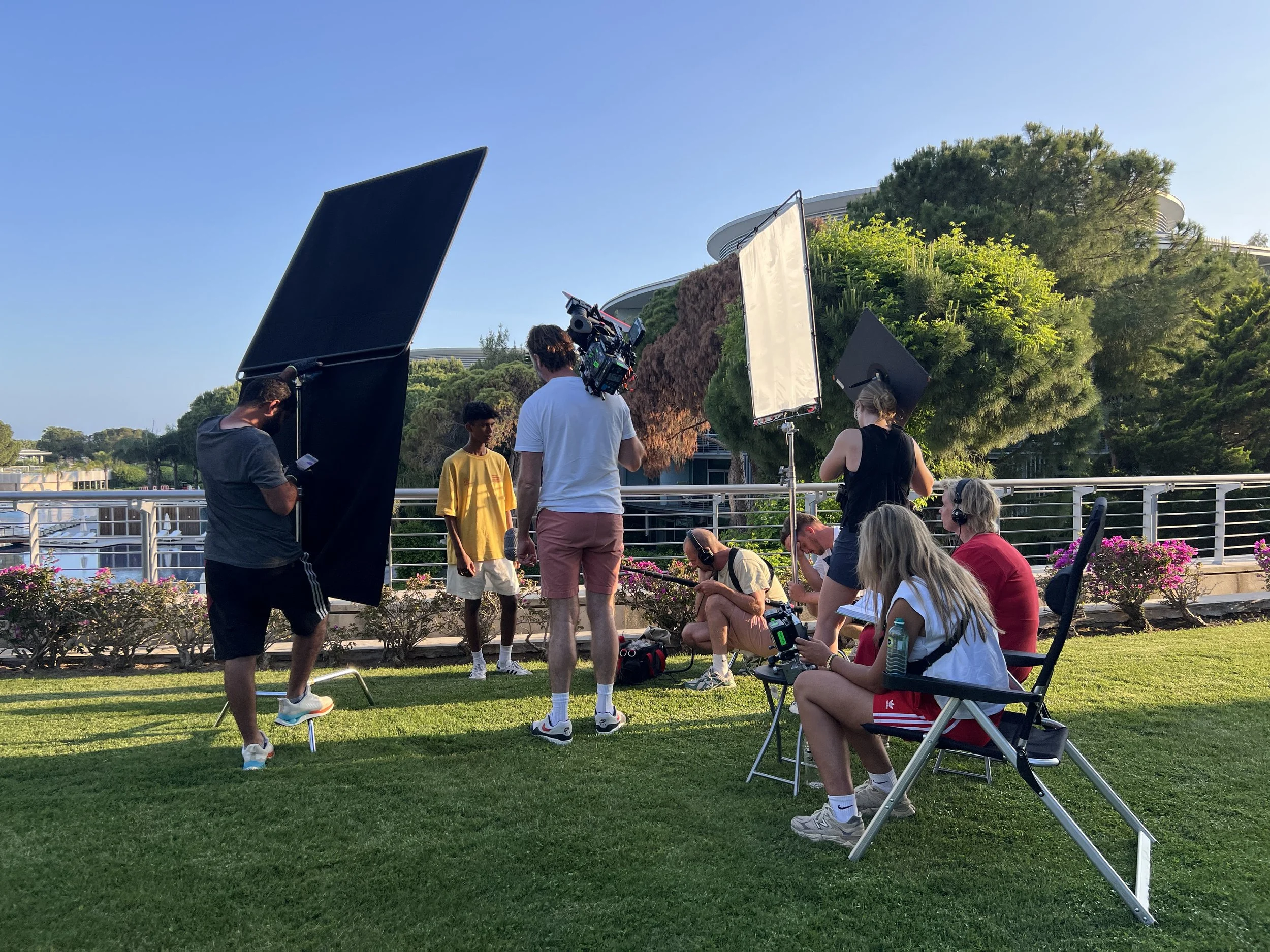
4. Build the Schedule Around the Destination
One of the easiest mistakes in overseas production is creating a shooting schedule purely in creative order.
Two locations may appear close on a map but be difficult to combine because of traffic, parking, access or loading time. Moving a two-person documentary crew is very different from relocating a commercial crew with lighting, talent and several vehicles.
Grouping locations geographically can save a surprising amount of time. Choosing the right hotel or production base can have the same effect, particularly in large cities where crossing from one part of town to another may take much longer than expected.
A realistic schedule should include travel time, setup time and some margin for delays. Trying to fit one additional location into a day is rarely worthwhile if it puts the rest of the shoot under unnecessary pressure.
5. Keep Communication Simple
International productions involve people working across different languages, time zones and production cultures. The more complicated the project, the more important it becomes to keep communication clear.
Having one local point of contact can make a major difference. Instead of coordinating separately with drivers, equipment suppliers, location owners and crew members, information can be managed through someone who understands the entire production.
Call sheets, location references, equipment lists and permit documents should also be shared in a clear and consistent format.
Small misunderstandings are relatively easy to fix during pre-production. They become much more expensive once the crew is already on location.
Good Preparation Protects the Creative Work
The purpose of production planning is not to make an overseas shoot feel complicated. It is the opposite.
When locations, permissions, equipment and logistics have been resolved before the shooting day, the director and creative team can focus on the work they actually travelled to create.
That is usually the difference between a production that feels difficult simply because it is abroad and one that runs like any other well-organised shoot.
